Follow Me !
Ultimate Garlic Herb Butter Roast Turkey Recipe

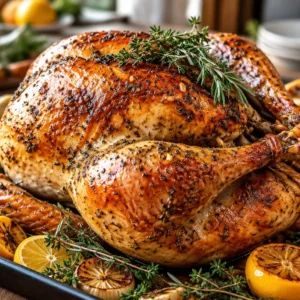
This Garlic Herb Butter Roast Turkey is a beautifully golden centerpiece with tender, juicy meat and rich, savory flavor in every slice. A fragrant butter mixture flavored with garlic and fresh herbs melts over the turkey as it roasts, creating crisp skin and delicious pan juices for serving.

Why Make This Recipe
- Full of flavor: Garlic, herbs, and butter add deep flavor while helping the turkey stay moist.
- A stunning centerpiece: The golden skin and aromatic herbs make this turkey perfect for holiday dinners and special gatherings.
- Simple preparation: A flavorful herb butter does most of the work, with no complicated techniques required.
- Easy to customize: Use your favorite herbs, add citrus or spices, and adjust the sides to suit your menu.
Ingredients
- Whole turkey, fully thawed
- Unsalted butter, softened
- Fresh garlic, finely minced
- Fresh rosemary, chopped
- Fresh thyme leaves
- Fresh sage, chopped
- Salt
- Freshly ground black pepper
- Lemon or orange, cut into wedges
- Onion, quartered
- Carrots and celery, cut into large pieces
- Chicken or turkey stock
- Olive oil, if needed
- Fresh herbs for garnish
Choose a turkey size based on the number of guests. You can use a blend of fresh herbs or substitute dried herbs when necessary; use less dried herb because its flavor is more concentrated.
How to Make It
Thaw the turkey safely.
If frozen, thaw the turkey in the refrigerator until completely defrosted. Remove the packaging and take out the neck and giblets from the cavity.Bring the turkey closer to room temperature.
Let the turkey sit at room temperature for about 30–60 minutes before roasting. Pat the skin and cavity thoroughly dry with paper towels. Dry skin browns more effectively.Prepare the garlic herb butter.
In a bowl, mix the softened butter with minced garlic, rosemary, thyme, sage, salt, and black pepper until evenly combined.Season the turkey.
Gently loosen the skin over the breast with your fingers, taking care not to tear it. Spread some herb butter underneath the skin, then rub the remaining butter over the breast, thighs, legs, and wings.Fill the cavity.
Place the lemon or orange wedges, quartered onion, and a few extra herb sprigs inside the cavity. These aromatics add fragrance and flavor as the turkey roasts.Prepare the roasting pan.
Arrange carrots and celery in the bottom of a roasting pan. Place the turkey breast-side up on a rack over the vegetables. Pour a little stock into the bottom of the pan, making sure it does not touch the turkey.Roast the turkey.
Roast in a preheated oven according to the turkey’s size and package instructions. If the skin browns too quickly, loosely cover the breast with foil. Baste occasionally with the pan juices if desired.Check for doneness.
The turkey is ready when a meat thermometer inserted into the thickest part of the thigh reaches 165°F (74°C). Avoid touching the bone when taking the temperature.Rest before carving.
Transfer the turkey to a cutting board and loosely cover it with foil. Let it rest for at least 20–30 minutes before carving so the juices can redistribute.Carve and serve.
Remove the legs and wings first, then slice the breast meat against the grain. Spoon some of the flavorful pan juices over the slices before serving.
How to Serve It
- Serve with classic sides such as mashed potatoes, stuffing, cranberry sauce, green beans, or roasted Brussels sprouts.
- Make a quick gravy with the pan drippings, stock, and a little flour or cornstarch.
- Garnish the platter with fresh rosemary, thyme, citrus slices, or roasted vegetables for an attractive presentation.
How to Store It
Let leftover turkey cool slightly, then place it in airtight containers and refrigerate within two hours of cooking. Store it in the refrigerator for up to four days.
For longer storage, freeze sliced turkey in airtight freezer bags or containers for up to three months. Add a little gravy or stock before freezing to help prevent the meat from drying out.
Reheat refrigerated turkey covered in a baking dish with a splash of stock or gravy at 325°F (165°C) until warmed through. Smaller portions can be reheated in the microwave using short intervals and a little added broth.
Helpful Tips
- Dry the skin well: Patting the turkey dry before adding the butter helps create crisp, golden skin.
- Use a thermometer: Cooking time can vary by turkey size and oven, so temperature is the most reliable way to check doneness.
- Do not skip the resting time: Resting keeps the juices inside the meat instead of letting them run onto the cutting board.
- Season under the skin: Herb butter beneath the breast skin flavors the meat directly and helps keep it moist.
- Avoid over-basting: Opening the oven frequently lowers the temperature. Baste only occasionally if you choose to do so.
Optional Variations
- Citrus herb butter: Add finely grated lemon or orange zest to the butter for a bright, fresh flavor.
- Spicy garlic butter: Mix in smoked paprika, cayenne, or crushed red pepper flakes for gentle heat.
- Maple herb turkey: Add a small amount of maple syrup to the butter for a subtle sweet note and beautifully browned skin.
- Different herbs: Substitute parsley, marjoram, tarragon, or cilantro according to your taste.
Frequently Asked Questions
Should I rinse the turkey before roasting?
No. Rinsing can spread raw poultry bacteria around the kitchen. Pat the turkey dry with paper towels instead, then wash your hands and sanitize the work area.
How do I know when the turkey is fully cooked?
Use an instant-read thermometer. The thickest part of the thigh and breast should reach 165°F (74°C), with the thermometer avoiding contact with bone.
Can I prepare the herb butter in advance?
Yes. Prepare it up to three days ahead and store it covered in the refrigerator. Let it soften before spreading it over the turkey.
Can I use dried herbs instead of fresh herbs?
Yes. Dried herbs work well, but use less than you would use fresh because their flavor is stronger. Rub them into the softened butter so they distribute evenly.
Why is my turkey breast dry?
Dry breast meat usually results from overcooking or skipping the resting period. Use a thermometer, cover the breast with foil if it browns quickly, and allow the turkey to rest before carving.
Can I make gravy from the pan drippings?
Yes. Strain the drippings, skim off excess fat, and combine them with stock and a thickener such as flour or cornstarch for a flavorful gravy.
Garlic Herb Butter Roast Turkey
This Garlic Herb Butter Roast Turkey is a beautifully golden centerpiece with tender, juicy meat and rich, savory flavor, enhanced by a fragrant garlic herb butter mixture.
Ingredients
Turkey and Aromatics
- 1 whole Whole turkey, fully thawed Choose a turkey size based on the number of guests.
- 1 piece Onion, quartered
- 1 each Lemon or orange, cut into wedges Use these for aromatic flavor inside the turkey.
- 2 cups Carrots and celery, cut into large pieces These will be arranged in the roasting pan.
- 2 cups Chicken or turkey stock For the roasting pan.
Garlic Herb Butter
- 1 cup Unsalted butter, softened Must be softened for easy mixing.
- 4 cloves Fresh garlic, finely minced
- 2 tablespoons Fresh rosemary, chopped
- 2 tablespoons Fresh thyme leaves
- 2 tablespoons Fresh sage, chopped
- 1 teaspoon Salt
- 1 teaspoon Freshly ground black pepper
- 2 tablespoons Olive oil If needed for moisture.
- 1 bunch Fresh herbs for garnish For the plating.
Instructions
Preparation
- Thaw the turkey safely in the refrigerator until completely defrosted and remove the packaging along with the neck and giblets.
- Let the turkey sit at room temperature for about 30-60 minutes before roasting. Pat the skin and cavity dry with paper towels.
- In a bowl, mix softened butter with minced garlic, rosemary, thyme, sage, salt, and black pepper until evenly combined.
- Gently loosen the skin over the turkey breast and spread some herb butter underneath. Rub the remaining butter over the turkey.
- Place lemon or orange wedges, quartered onion, and extra herb sprigs inside the cavity.
- Arrange carrots and celery in the bottom of the roasting pan, and place the turkey breast-side up on a rack over the vegetables.
Roasting and Serving
- Pour chicken stock into the bottom of the pan, ensuring it does not touch the turkey.
- Roast in a preheated oven according to the turkey size and package instructions, loosely covering with foil if the skin browns too quickly. Baste occasionally with pan juices.
- Check doneness using a meat thermometer. It should reach 165°F (74°C) in the thickest part of the thigh.
- Transfer the turkey to a cutting board, cover loosely with foil, and let it rest for at least 20-30 minutes before carving.
- Remove legs and wings first, then slice the breast meat against the grain and serve with pan juices.
Notes
Serve with classic sides like mashed potatoes and stuffing. Store leftovers in airtight containers in the fridge or freeze for longer storage. Allow resting time for juicier meat.