Follow Me !
Grandma’s Best-Ever Homemade Thanksgiving Stuffing Recipe

Grandma’s Thanksgiving stuffing is the kind of comforting side dish that makes the whole holiday table feel complete. With tender bread, savory herbs, aromatic vegetables, and plenty of rich flavor, this classic stuffing is easy to prepare and satisfying enough to please both traditionalists and first-time cooks.
Why Make This Recipe
- Classic holiday comfort: Warm bread, herbs, butter, and vegetables create the familiar flavor everyone expects at Thanksgiving.
- Simple and dependable: This recipe uses approachable ingredients and straightforward preparation, making it ideal for a relaxed holiday meal.
- A crowd-pleasing side: Its soft center and lightly crisp top pair beautifully with turkey, gravy, and nearly every traditional Thanksgiving dish.
- Easy to customize: You can adjust the herbs, add-ins, and texture to suit your family’s preferences.
Ingredients
Use these ingredients as a flexible guide, adjusting amounts to match the size of your gathering:
- Cubed day-old bread, such as white bread, French bread, sourdough, or cornbread
- Butter
- Chopped onion
- Chopped celery
- Garlic, optional
- Chicken or turkey broth
- Fresh or dried sage
- Fresh or dried thyme
- Fresh parsley
- Salt and black pepper
- Eggs, optional, for a more cohesive baked stuffing
You can also include extras such as cooked sausage, sautéed mushrooms, dried cranberries, chopped apples, or toasted pecans.
How to Make It
Dry the bread. Cut the bread into small cubes and spread them on a baking sheet. Leave them uncovered for several hours or overnight. For a faster option, toast them in a low oven until dry but not deeply browned.
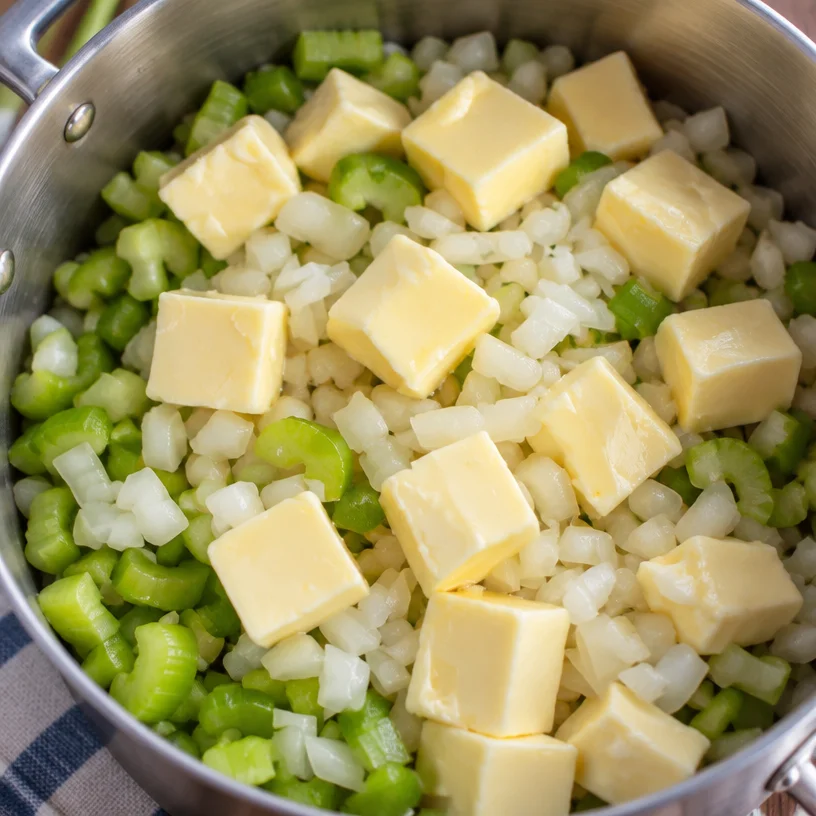
Cook the vegetables. Melt butter in a large skillet over medium heat. Add the onion and celery and cook until softened. Stir in the garlic, if using, during the final minute.
Add the seasonings. Mix in the sage, thyme, parsley, salt, and black pepper. Cooking the herbs briefly with the vegetables helps release their aroma.
Combine the bread and vegetables. Place the dried bread cubes in a large bowl. Pour the buttery vegetable mixture over them and toss gently.
Moisten the stuffing. Gradually add warm broth, stirring as you go. Stop when the bread is moist but not soggy. If you want stuffing that slices neatly, whisk eggs into a little cooled broth before mixing them into the bread.
Transfer to a baking dish. Spoon the mixture into a greased baking dish and spread it into an even layer. Avoid packing it too tightly, which can make the finished stuffing heavy.
Bake until golden. Cover the dish for the first part of baking to keep the center tender, then uncover it near the end so the top can become lightly crisp and golden.
Rest before serving. Let the stuffing stand for several minutes before serving. This allows the moisture to settle and makes it easier to scoop.
How to Serve It
Serve the stuffing warm alongside roasted turkey, chicken, or glazed ham. It is especially delicious with turkey gravy or a spoonful of cranberry sauce.
For a complete Thanksgiving plate, pair it with mashed potatoes, green bean casserole, roasted vegetables, sweet potatoes, and a fresh seasonal salad. A sprinkle of chopped parsley just before serving adds color and a fresh finish.
How to Store It
Allow leftover stuffing to cool slightly, then place it in an airtight container and refrigerate it within two hours. Stored properly, it will keep in the refrigerator for several days.
To reheat, place the stuffing in a covered baking dish with a small splash of broth. Warm it in the oven until heated through, then uncover it briefly to restore a crisp top. Individual portions can also be reheated in the microwave, though the topping will be softer.
For longer storage, freeze cooled stuffing in a freezer-safe container for up to a few months. Thaw it in the refrigerator before reheating with a little broth.
Helpful Tips
- Use dry bread: Day-old or lightly toasted bread absorbs broth without turning mushy.
- Add broth gradually: Different breads absorb liquid at different rates, so pour slowly and stop once the mixture is evenly moistened.
- Do not overmix: Toss the ingredients gently to preserve some texture and prevent dense stuffing.
- Taste before baking: If the mixture is safe to taste, check the seasoning before adding it to the baking dish. Remember that broth and butter may already contain salt.
- Prepare ahead: Assemble the stuffing a day in advance, cover it, and refrigerate it. Let it sit briefly at room temperature before baking, adding a few extra minutes if needed.
Optional Variations
- Sausage stuffing: Brown mild or spicy sausage, drain it well, and fold it into the bread mixture.
- Apple and pecan stuffing: Add diced tart apples, toasted pecans, and a little extra thyme for a sweet-savory variation.
- Mushroom and herb stuffing: Sauté sliced mushrooms with the onion and celery, then add extra sage and parsley.
- Cornbread version: Replace some or all of the bread with crumbled cornbread for a tender, slightly sweet Southern-style stuffing.
- Vegetarian stuffing: Use vegetable broth instead of chicken or turkey broth.
Frequently Asked Questions
Can I make this stuffing with fresh bread?
Yes, but fresh bread contains more moisture. Cut it into cubes and dry or toast it first so it can absorb the broth without becoming soggy.
Can I prepare stuffing ahead of time?
Yes. Assemble it, cover it tightly, and refrigerate it until you are ready to bake. Add a little extra baking time if it goes into the oven cold.
What is the difference between stuffing and dressing?
Stuffing traditionally refers to a bread mixture cooked inside poultry, while dressing is baked separately in a casserole dish. In everyday use, the terms are often used interchangeably.
How do I keep stuffing from becoming dry?
Add enough broth to moisten the bread, cover the dish while it bakes, and avoid overbaking. A splash of warm broth can also refresh leftovers during reheating.
Can I add an egg to the recipe?
Yes. Egg helps bind the ingredients and creates a more cohesive texture. Whisk it with some cooled broth before adding it to the bread mixture.
Can stuffing be cooked inside the turkey?
It can, but food-safety guidelines require the center of the stuffing to reach a safe temperature. Baking it separately is easier to monitor and usually produces a crisper, more evenly cooked result.
Thanksgiving Stuffing
A comforting side dish featuring tender bread, savory herbs, and aromatic vegetables. Perfect for Thanksgiving and easy to customize.
Ingredients
Main Ingredients
- 10 cups Cubed day-old bread Can use white bread, French bread, sourdough, or cornbread
- 1/2 cup Butter Unsalted preferred
- 1 cup Chopped onion For flavor and aroma
- 1 cup Chopped celery
- 2 cloves Garlic Optional, adds flavor
- 4 cups Chicken or turkey broth Can substitute with vegetable broth for vegetarian version
- 1 tablespoon Fresh or dried sage
- 1 tablespoon Fresh or dried thyme
- 1/2 cup Fresh parsley Chopped
- 1 teaspoon Salt To taste
- 1/2 teaspoon Black pepper To taste
- 2 large Eggs Optional, for binding
Optional Extras
- 1 cup Cooked sausage Adds flavor and heartiness
- 1 cup Sautéed mushrooms Incorporate for umami flavor
- 1 cup Dried cranberries For a hint of sweetness
- 1 cup Chopped apples Adds sweetness and texture
- 1/2 cup Toasted pecans For added crunch
Instructions
Preparation
- Dry the bread by cutting it into small cubes and spreading them on a baking sheet. Leave uncovered for several hours or overnight, or toast in a low oven until dry.
- Melt butter in a large skillet over medium heat. Add the chopped onion and celery, cooking until softened. Stir in garlic during the final minute if using.
- Mix in sage, thyme, parsley, salt, and black pepper, cooking briefly to release the aromas.
- In a large bowl, combine dried bread cubes with the buttery vegetable mixture and toss gently.
- Gradually add warm broth while stirring until the bread is moist but not soggy. If using, whisk eggs into a little cooled broth before adding.
Baking
- Transfer the mixture to a greased baking dish, spreading into an even layer without packing it tightly.
- Cover the dish and bake until golden at the edges, uncovering near the end for a lightly crisp top.
- Let the stuffing stand for several minutes before serving to allow moisture to settle.
Notes
Serve warm alongside turkey, gravy, or cranberry sauce. For a classic Thanksgiving plate, pair with mashed potatoes and green beans. Leftovers can be stored in an airtight container and reheated as needed.